Targeted introduction of compressive residual stresses to counteract tensile residual stresses and effectively prevent stress corrosion cracking (SCC).
Tata Steel Netherlands Uses PIT for Weld Treatment
Welded structures in industrial facilities are often exposed to high mechanical loads and corrosive environments. In particular, the combination of tensile stresses and a corrosive medium can lead to a significant risk of stress corrosion cracking (SCC).
Critical weld areas and adjacent heat-affected zones (HAZ) can be particularly susceptible. Cracking can compromise the structural integrity of components, lead to unplanned downtime and result in high costs for inspection, repair or replacement.
Mit der PIT-Technologie (Pneumatic Impact Treatment) lassen sich Schweißnähte und Wärmeeinflusszonen gezielt nachbehandeln. Durch die Einbringung von Druckeigenspannungen werden vorhandene Zugeigenspannungen überlagert und die Widerstandsfähigkeit der behandelten Bereiche gegenüber Spannungsrisskorrosion verbessert.
PIT can help extend the service life of welded structures, reduce maintenance requirements and sustainably improve construction reliability.
2
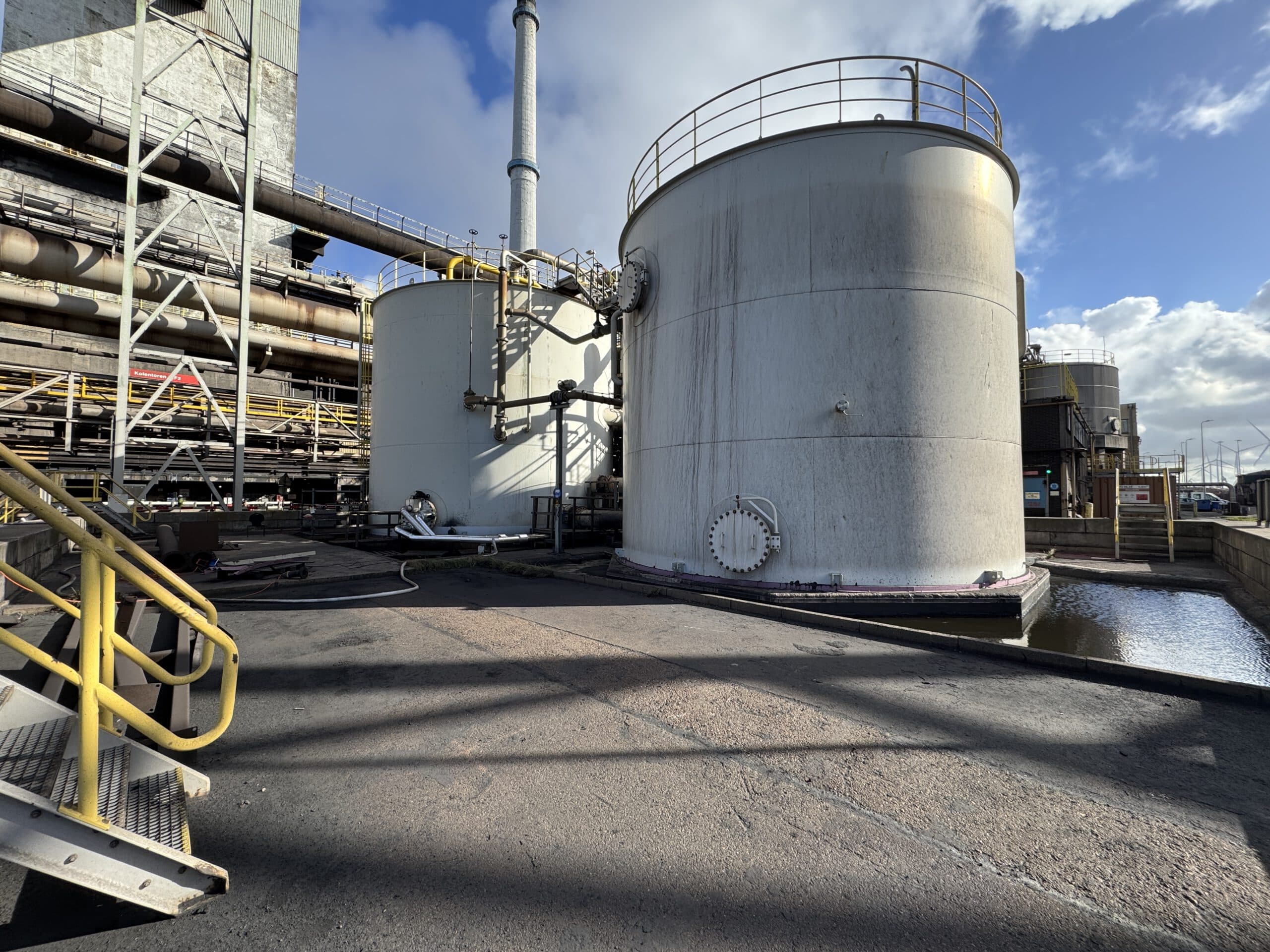
Large Tanks
1
Heat-Affected Zone
Many years
of additional service life
Targeted Post-Treatment of Welds
Sämtliche Schweißnähte am Boden von zwei Großtanks wurden inklusive der Wärmeeinflusszone (WEZ) mit PIT behandelt.
The goal was to counteract tensile residual stresses by introducing compressive residual stresses, thereby reducing susceptibility to stress corrosion cracking.
Tata Steel’s experience has been very positive. SCC has also been successfully prevented in applications for other customers.
Sustainable Service Life Extension with PIT
PIT is more than just a post-treatment for welds – the process actively helps extend the service life of components and industrial plants while preventing failures.
Keeping Your Facilities Safe and Reliable for Longer
Would you like to learn more about PIT and the possibilities for your application?