
Machinery and equipment with a limited service lifespan not only come at a significant cost to you, but also to the environment:
All of this increases CO₂ emissions, pollutes the environment and is neither economical nor sustainable.


This is precisely what’s made possible with PIT (Pneumatic Impact Treatment), a process that deliberately induces compressive residual stresses in critical areas of your components:
By preventing fatigue cracks, you reduce costly repair measures. In addition, you significantly increase the (remaining) service life of your systems and machinery. This allows you to continue operating your existing facilities already under load.
All this not only reduces your own costs but also drastically cuts down on CO₂ emissions.
While lightweight construction and the associated environmental benefits have long been recognized, they can also lead to additional costs and effort in manufacturing.
PIT (Pneumatic Impact Treatment) is a reproducible HFMI (High-Frequency Mechanical Impact) process for the post-weld treatment of welded joints. It introduces compressive residual stresses and improves the weld toe geometry, significantly increasing fatigue strength and fatigue life.
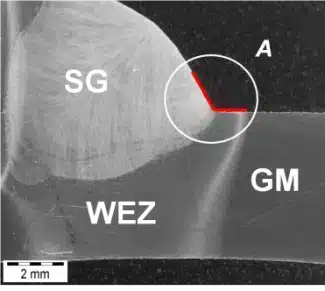

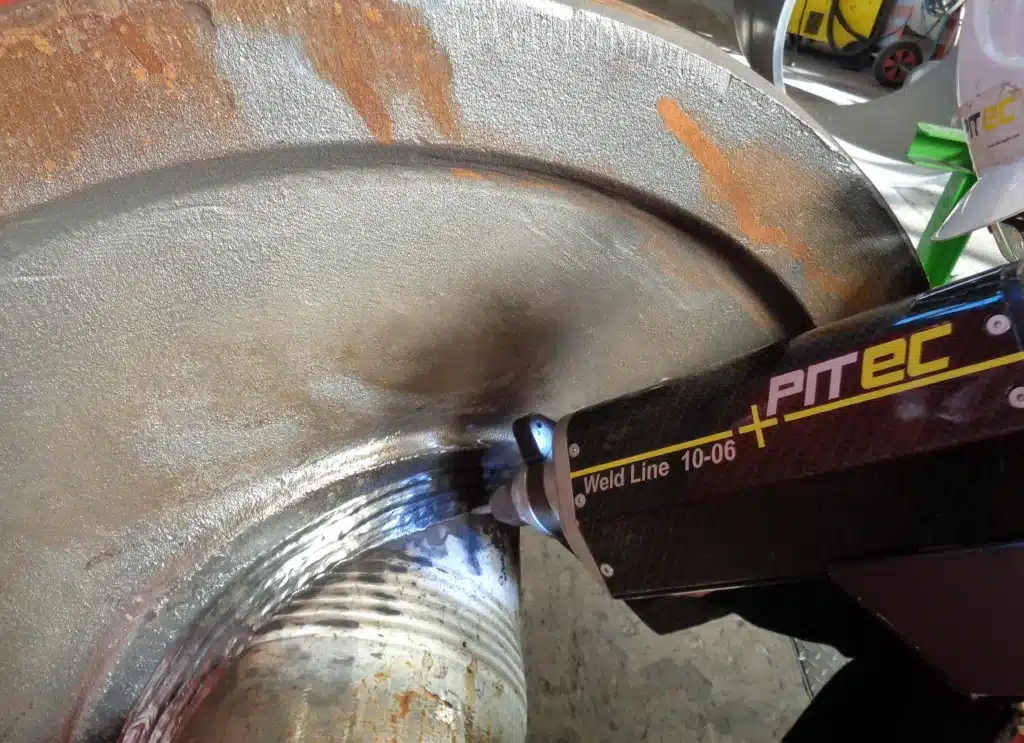
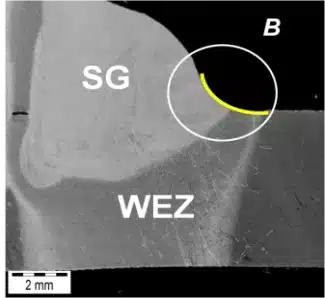
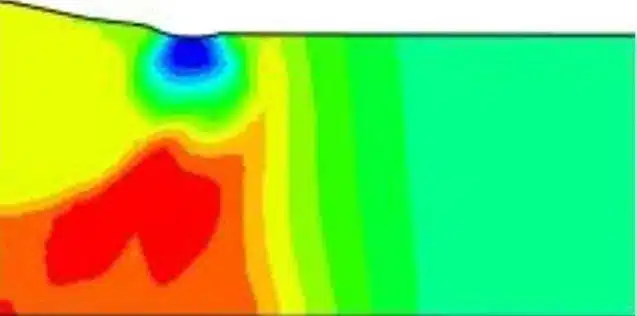

In addition to extensive scientific evidence confirming the HFMI (High-Frequency Mechanical Impact) effect, the University of Stuttgart has demonstrated the high reproducibility of PIT without the risk of overtreatment.
The application of HFMI is covered by relevant standards and guidelines:
IIW Recommendations on HFMI Treatment 2026-10
Eurocode 3 – DIN EN 1993-1-9:2026-10
→ Additional listings are in progress.
Since 2008, PITEC has rapidly emerged as the global leader in the field of HFMI (High-Frequency Mechanical Impact). Through many years of experience and continuous development, PITEC has established itself as the international leader. In 2018, PITEC was acquired by Hermann Fliess & Co. GmbH .
Fliess is a manufacturer of welding consumables with particular expertise in high-strength steels. With PIT enabling the use of high-strength steels even under fatigue conditions, a unique synergy arises.

The SMS Group is constructing, on behalf of the OTTO FUCHS Group, at the Paramount USA site, within the subsidiary Weber Metals, the new hydraulic press with a force of 540 MN. To achieve the required strength values according to FKM, the SMS Group decided to treat the free surfaces of the bores extensively with our PIT process, thereby introducing high compressive residual stresses deep into the surface.
It is particularly noteworthy in this context that, despite an area totaling more than 8m2, SMS opted for PIT instead of shot peening.
Despite professional repairs, cracks repeatedly appeared in the inner circumferential welds of steam drums at the Munich City Utilities' combined heat and power plant.
In May 2011, in cooperation with TÜV Süd, the decision was made to treat the entire seam area including the heat-affected zone (HAZ) on two drums with PIT.
However, due to the high operating temperatures exceeding 500° C, we at PITEC were skeptical whether the introduced compressive residual stresses would be excessively reduced, potentially impacting a sustainable effect.
In February 2020, the PIT team learned that no new cracks have appeared in the PIT-treated area during regular inspections, even to date.
In 2012, 8000 cracks were detected in the crane systems area at ArcelorMittal's Belgian plant in Ghent.
In 2014, an R&D project at their own institute, OCAS, recognized PIT as the most promising solution and implemented the process in the restoration.
Five years later, in 2019, the number of detected cracks had dropped to only 700. This represented a reduction of over 90%!
After mechanically working out cracks in the upper handle of the 200 MN press, Casper Hahn rebuilt the material with suitable welding metal.
This led to the development of high local tensile stresses.
To prevent this, the PIT process was applied by means of “intermediate layer hammering.”
Subsequently, pressure residual stresses were introduced into the particularly stressed areas using PIT to enhance the fatigue strength of the press.
Pitec.de | Copyright ©2024 |
All Rights Reserved
Sales & Technical service
Siemensstraße 1b
50170 Kerpen